
 Français (France)
French Exercise ORIONIS 26: Testing Military MRO Under High Intensity
March 3rd, 2026 News brief - From February 10th to 12th, 2026, several hundred military MRO players ("MCO-A" in French) - military and civilian personnel of the armed forces (including nearly two hundred personnel from the Aeronautical Maintenance Directorate (DMAé) ), as well as state-owned (SIAé) and private industry players – took part in the ORIONIS 26 exercise, a component of the broader ORION 26 exercise which was specifically dedicated to military MRO.
This fourth edition of the Orionis exercise, organized and conducted by the French Air and Space Force (AAE), once again aimed to test real combat MCO in a high-intensity context. Prepared over a six-month period and conducted at the Mérignac French Air and Space Base and at Balard, ORIONIS 26 aimed more specifically to help answer the following question: is the French "MCO-A chain" capable of sustaining a high-intensity maneuver over time, under significant time constraints and risks?
To achieve this, the exercise was based on 74 fictional scenarios (including 17 involving the Rafale, 11 involving the A400M, and seven involving the Caracal) and around 100 simulated technical vignettes designed to train mechanics to manage complex situations that do not fit within the usual framework.
Extension of the scope of Military MRO and a field for innovation
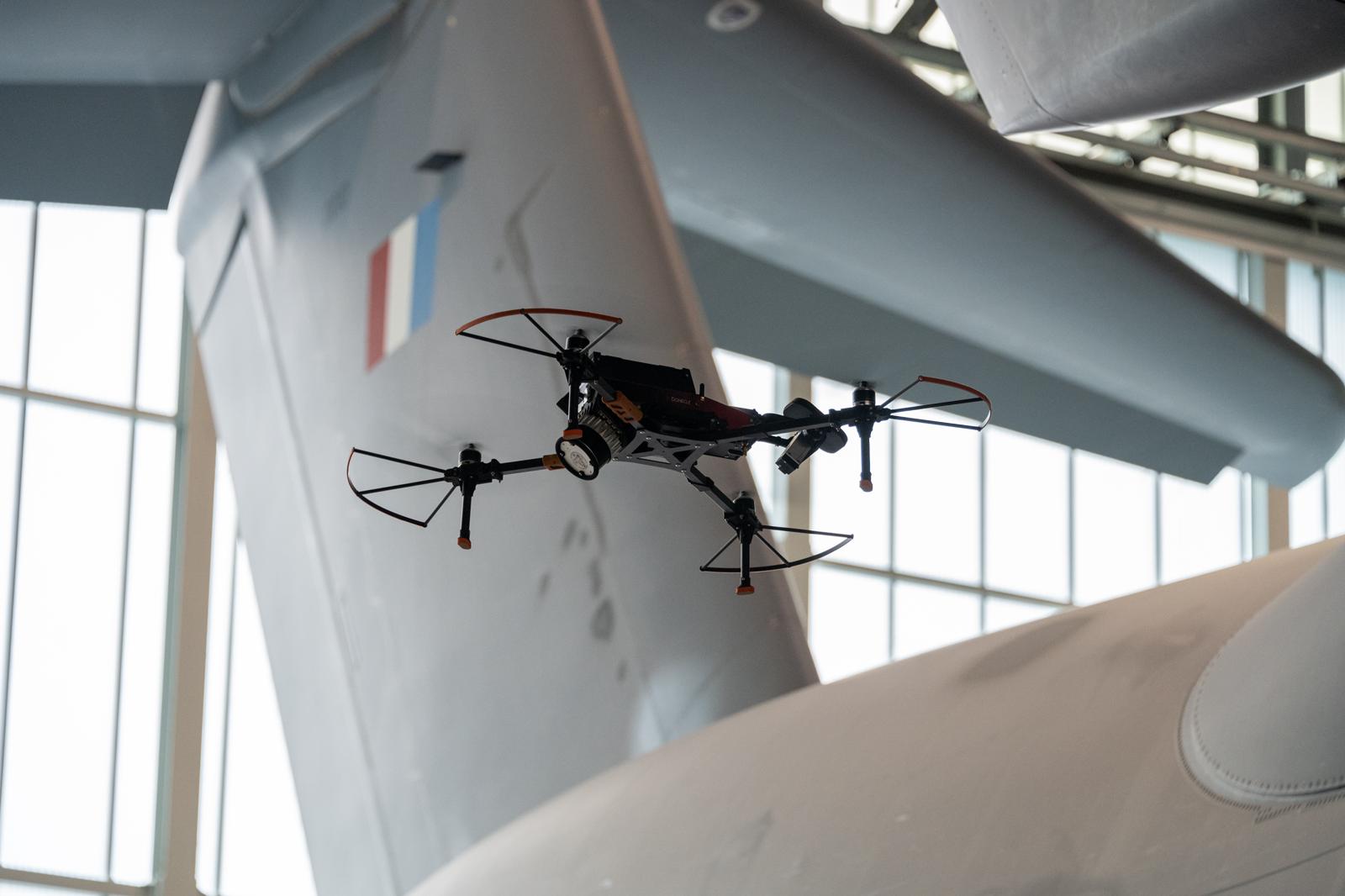
For the first time, the Reaper and ALSR (« Avion léger de surveillance et de reconnaissance » i.e. light ISR planes) fleets were included in the exercise, marking the extension of the MCO-A scope to new-generation aerial intelligence systems. At the same time, several innovations were tested or retested: the use of drones to inspect the A400M, the use of scanners to map defects, the acceleration of engine production, and even cross-maintenance operations with foreign partners.
This framework made ORIONIS 26 a real testing ground for innovation and cooperation between the military and industry, promoting resilience and adaptability in combat situations.
PCS on the front line
At the heart of the system, the support command centers (PCS) were placed on the front line. Under the supervision of the Operational Coordination Office, their mission was to provide the forces with appropriate, responsive, and consistent responses, taking into account the requirements of current and future maneuvers. It was no longer just a matter of applying peacetime procedures, but of supporting an ongoing maneuver, arbitrating scarce resources, and making decisions under time and risk constraints.
One of the major lessons learned from ORIONIS 26 is this transformation of the role of MCO-A: support is no longer a simple technical “back office,” but a full-fledged participant in the maneuver. The commander of the supported force must have a consolidated, real-time view of the technical and operational situation of the fleets in order to decide: which vectors to engage, which to preserve, where to accept risk, how to regenerate as quickly as possible, etc.
MCO-A thus becomes a truly recognized combat function that is fully integrated into the decision-making loop.
Towards a culture of controlled risk
The exercise also had an explicit objective: to “put pressure on the technical and operational chains” of support in the field of MCO-A, while developing a culture of controlled risk. In concrete terms, this means moving away from the highly prescriptive logic of peacetime, where strict compliance with standards is sought, and toward a logic of active risk management: accepting that ideal conditions may not always be met, while ensuring that crews, weapons systems, and missions are not exposed to unacceptable risk.
In this perspective, the role of the PCS appears central, with the DMAé bringing together the skills of the various players: DMAé technical teams, forces, manufacturers, and DGA. When the implementation of a standard technical solution is not feasible (too long a lead time, unavailable resources, degraded environment), these combined skills make it possible to analyze the risk, propose controlled alternative solutions, and provide the operational commander with clear and well-argued options that he can decide on with full knowledge of the facts.
A continuous transformation approach for MCO-A
ORIONIS 26 is not limited to a one-off demonstration, but is part of a continuous improvement process. Feedback is planned both “hot” and “cold”: first to immediately capture feelings, obstacles, and best practices, then to analyze scenarios, decisions, and their impacts with more insight. The stated objective is to fuel the evolution of MCO-A organizations and procedures so that they are aligned with the requirements of the current strategic context, marked by a return to high intensity and the need to prepare for major, potentially prolonged engagements.
ORIONIS 26 thus marks an important step in the maturation of a true combat MCO. By confronting the DMAé, the AAE, and manufacturers with tough scenarios, by placing the PCS at the heart of support operations, and by embracing the notion of controlled risk as a normal but regulated component of combat, the exercise contributes to the evolution of reflexes, tools, and culture. Above all, it reminds us of an often underestimated fact: without an MCO-A capable of withstanding the shock, even the best-designed air maneuver cannot be sustained over time.
By Murielle Delaporte
References
https://www.aerobuzz.fr/breves-defense/le-maintien-en-condition-operationnelle-en-temps-de-guerre/
Photo © AAE, LinkedIn & Facebook, February 2026