
 Français (France)
AD2S Podcast - High Intensity: Sustaining Operations in a Contested Environment
May 11th, 2026 - At the crossroads of industrial and operational cultures, Gilles Gaillot, Strategy & Marketing Director of Thales DMS France, invited his audience to rethink high-intensity sustainment beyond high intensity as a purely military phenomenon, grounding his remarks in the following observation: in a contested environment, industry itself becomes a target.
Gilles Gaillot stressed that high intensity begins with an assessment of future events, the forms of confrontation that will have to be faced, and above all “what will have to be overcome in order to endure.”
Facing High Intensity: Moving from a Formula 1 Culture to Genuine Resilience
To characterize this reality, Gilles Gaillot used an analogy inspired by “design thinking” approaches, placing keywords on a board such as: “overactivity, over-intensity, battle damage, attrition, deployment,” but also “dispersion, endurance capacity, protection, resilience.”
To these terms, already widely discussed during the roundtable, he added one structuring concept: that of the contested environment. This notion, increasingly present in doctrinal thinking, particularly in the United States, now fully applies to sustainment activities. The issue is no longer simply operating in a contested operational environment, but rather in a contested logistics and sustainment environment.
High intensity therefore does not concern the armed forces alone. It extends across the entire security and defense continuum, from operational requirement to the industrial base, exposing the military instrument to increased vulnerability throughout its industrial depth.
This observation leads Gilles Gaillot to question what constitutes the central challenge of the transformation ahead for industry: agility. Recent feedback, particularly from the war in Ukraine, shows that innovation no longer unfolds over long cycles, but rather at weekly - or even sub-weekly - rhythms. And this acceleration affects the entire continuum, not just operational tactics.
Yet agility is not the natural reflex of the defense industry, whose organization resembles a machine optimized for maximum efficiency and governed by the principles of “Formula 1 pit crews.” “With Lean methods as its religion,” this industrial organization is designed to process known, stabilized input data and eliminate all forms of friction. “Grains of sand” are not part of the model.
Recent crises such as Covid-19 demonstrated that industry was capable of absorbing isolated shocks. But high intensity requires something different: no longer merely absorbing a single incident, but functioning sustainably amid uncertainty and under permanent constraint. The logic must shift from efficiency to effectiveness.
Resilience thus becomes a central issue, illustrated by Gilles Gaillot through a very concrete example: the major fire that occurred last January at the Thales site in Brest, which had the potential to directly impact industrial activity.
Since 2020, Thales has invested more than €700 million to secure its supply chain, because the failure of a single link can have major repercussions. This growing awareness has translated into several lines of effort: securing critical components, reflecting on future access to rare earths, reshoring certain production capabilities back to France (particularly in the field of printed circuit boards), and strengthening support to subcontractors. The objective now is to be capable of absorbing shocks whose very nature is unknown in advance, because the only certainty in high intensity is that events will never unfold as planned.
Returning to a Mission Availability Logic and “Day-to-Day Support”
Gilles Gaillot reaffirmed that sustainment is a military capability in itself — not merely what makes another capability available, but an autonomous ability to deploy, endure, deter, and generate effects. Elevating sustainment to this level means recognizing that it is constitutive of military power itself. This doctrinal evolution is now highly visible in certain international approaches, especially American ones, and much less so in other models, whether Russian or Chinese. But in his view, this asymmetry could evolve.
This recognition implies a new responsibility for industry, which becomes a full-fledged actor in military capability rather than a mere service provider. How can the industrial tool be transformed to respond to such an evolution? For Gilles Gaillot, this transition is often associated with fears of additional cost. Yet the traditional stockpiling approach appears, in the aerospace domain, both industrially unrealistic and financially unattainable. Other operating models must therefore be invented.
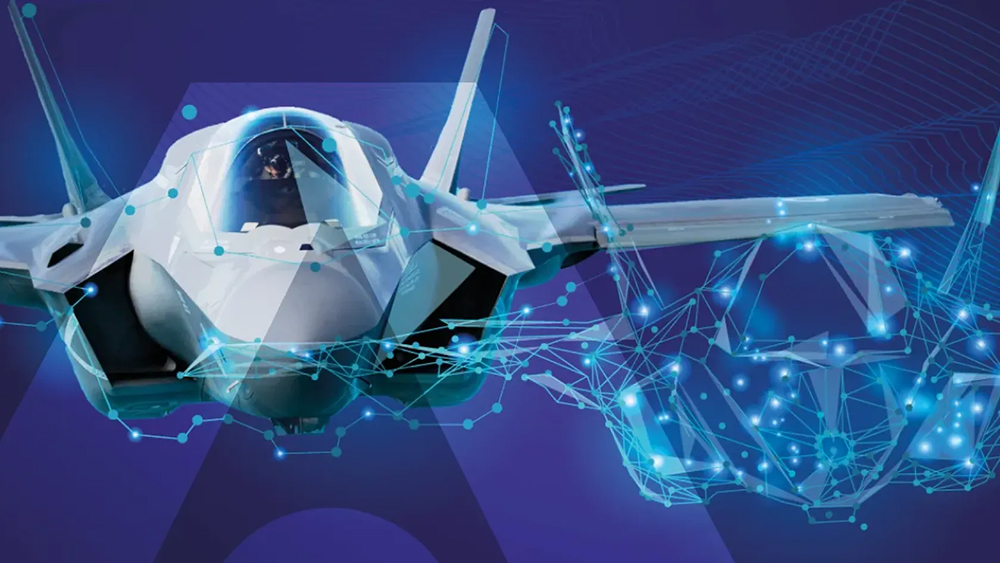
It is within this perspective that work on digital twins, predictive maintenance, and advanced data exploitation must be understood. These tools make it possible to avoid a logic of massive stockpiling by anticipating needs and adapting responses.
Operational Risk Management (ORM) also constitutes a key lever. It enables different, faster repair methods, already successfully tested during the French ORIONIS exercises. But it also requires overturning deeply rooted cultures based on the strict observance of processes and manuals.
Exercises demonstrate that industry is capable of stepping outside the established framework when the situation requires it. But once the pressure subsides, organizations naturally tend to revert to their optimized processes. This raises the entire question of sustainability: how can one move from isolated experimentation to a structured high-intensity organization?
For Gilles Gaillot, the answer lies in clear frameworks. In the military world, these are plans and orders. On the industrial side, they are contracts. The point is not to pretend that everything can be contractually anticipated, but rather to establish a sufficiently solid foundation to enable adaptation without falling back into a “Formula 1 process” logic.
The work undertaken by the French armed forces ministry’s maintenance directorate DMAé (for “Direction de la maintenance aéronautique”) through vertically integrated contracts, and later global support contracts, moves precisely in this direction: creating a robust and evolving framework upon which a genuine high-intensity sustainment capability can be built.
Finally, Gilles Gaillot highlighted a major conceptual shift: the transition from a fleet availability logic to a mission availability logic. Having equipment available is not enough if the system as a whole cannot accomplish the operational mission. Sustainment must therefore be conceived at the mission-system level rather than solely at the platform level.
This approach, initially designed for high intensity, is also beginning to permeate other forms of engagement. The tools and methods developed for "D-Day" are gradually finding their place in day-to-day sustainment, benefiting specific detachments or operations conducted under constraints. Once again, this evolution calls for greater contractual formalization so that industry can support the armed forces in a fluid, effective, and sustainable manner.
Through this intervention, Thales makes an essential contribution to the collective reflection: high intensity is not merely a question of volume or tempo, but a profound transformation of industrial logics, in which sustainment itself becomes a field of confrontation. In a contested logistics and sustainment environment, the ability to endure, adapt, and decide rapidly becomes -for industry as much as for the armed forces - a condition for operational superiority.
By Murielle Delaporte
Illustration: digital twin © Thales, https://www.thalesgroup.com/en/advanced-technologies/simulation
Listen to this podcast on our AD2S LinkedIn.